Social Media Strategies for Restaurants in [City] That Work
Actionable tactics for [City] restaurant owners to grow followers, boost engagement, and fill tables year-round.
Build a Local-First Content Engine
Define Your Audience and Voice in [City]
Winning with social media strategies for restaurants in [City] starts by defining exactly who you serve. Profile your core guests by neighborhood, workday patterns, dietary needs, and price sensitivity, then map those traits to content themes. A brunch crowd may crave bright reels and table-side moments, while weekday regulars respond to quick specials and behind-the-scenes prep. Document a tone of voice that fits your brand-warm and neighborly, or crisp and culinary-and keep it consistent across captions and replies. This clarity sharpens restaurant social media marketing [City] efforts and prevents scattered posting that confuses potential diners.
Translate audience insights into repeatable storytelling pillars so your feed never runs dry. Rotate spotlights on staff, seasonal ingredients, limited-time offers, and guest experiences that reflect local restaurant marketing [City] priorities. Write caption templates for each pillar to speed production without sounding canned, and align them with your photography style. Set measurable goals-reservation clicks, message replies, or takeout conversions-so every post has a purpose. With this foundation, restaurant social media marketing [City] becomes focused, scalable, and unmistakably local.
Localize Menu Stories: Social Media Strategies for Restaurants in [City]
Turn dishes into narratives anchored in [City] so guests feel a sense of place with every scroll. Credit neighborhood farms, markets, and roasters, and tag them to amplify reach and strengthen local restaurant marketing [City] relationships. Share micro-stories about sourcing trips, chef tastings, and how weather shifts the menu, then invite followers to weigh in on flavors or pairings. This approach doubles as user-generated content restaurants can celebrate when guests echo those stories in their own posts. The result is a living menu that keeps returning diners curious and first-timers compelled to book.
Elevate each feature with structured visuals and smart captions that cue action. Combine tight ingredient shots with plating sequences and cozy dining-room scenes to create a scroll-stopping rhythm. Use clear calls to action-reserve now, preorder, or DM for large parties-so discovery turns into bookings. Sprinkle in neighborhood hashtags and partner tags to extend reach without spamming, and keep geotags consistent for mapping visibility. Over time, these localized narratives become pillar assets within social media strategies for restaurants in [City], building both brand affinity and measurable demand.
Content Calendar and Posting Cadence That Stick
Consistency beats bursts of inspiration when tables are on the line. Build a 30-day calendar that pairs high-impact tentpoles-holidays, sports games, festivals-with weekly anchors like new-dish reveals and team spotlights. Set realistic output goals per platform, leaning into Instagram marketing for restaurants where visuals convert and Reels drive reach. Batch-capture photography and video during slower hours to streamline production, and use templates to keep formats uniform. A documented cadence supports local restaurant marketing [City] while minimizing last-minute scrambles that water down quality.
Measure engagement against your calendar to refine what stays and what drops. Track which posts lead to reservation clicks, and mark time-of-day windows that consistently perform. Fold in audience questions and repeat requests as fast content wins, then schedule them during proven peaks. Repurpose top performers into Stories, Reels, and Shorts without copy-paste captions; reframe the hook to fit each format's rhythm. Over a quarter, this system cements dependable outputs that power social media strategies for restaurants in [City] with less stress and better ROI.
Platform Plays That Drive Reservations
Instagram Marketing for Restaurants: Visuals That Convert
Lead with sensory-first storytelling that makes viewers taste the screen. Shoot natural-light close-ups, steam curls, and sizzling moments, then pair them with table-wide overheads that show portion and vibe. Alternate hero dishes with people-focused frames-chefs finishing plates, bartenders flaming garnishes, guests toasting-to humanize the brand. Use carousels to sequence the journey from raw ingredient to plated masterpiece, ending with a clear reservation prompt. This is Instagram marketing for restaurants done with intent, not just aesthetics.
Optimize each asset for discoverability and action. Pin three evergreen highlights-Menu, Reservations, Events-and keep them updated weekly. Caption with keyword-rich phrasing like local restaurant marketing [City] and restaurant social media marketing [City] while keeping copy natural. Add location tags and a small set of relevant neighborhood hashtags, then encourage saves with tips like ideal pairings or reheating guidance for takeout. Over time, these habits turn impressions into table turns without paid spend.
Facebook Ads Tactics: Social Media Strategies for Restaurants in [City]
Use Facebook ads for restaurants to capture nearby intent with precision. Start with proximity targeting around your block, commuter corridors, and event venues, then layer interests like brunch, wine bars, or family dining. Promote limited-time menus, prix fixe nights, and seasonal cocktails with strong deadlines that create urgency. Test creative pairs-tight dish macro vs. lively dining room-and rotate winners into your main campaigns weekly. These paid moves anchor social media strategies for restaurants in [City] when you need predictable bookings.
Optimize for reservations or message replies, not just link clicks. Build custom audiences from website visitors, past bookers, and engaged Instagram users, then expand with lookalikes. Set frequency caps to avoid fatigue, and refresh copy before performance dips. Use offer ads for midweek fills and click-to-Call ads ahead of holidays when last-minute groups scramble. Over a month, Facebook ads for restaurants can stabilize demand while your organic engine heats up.
TikTok and Reels: Short-Form That Sparks Cravings
Short-form video is your speed lane to awareness and word-of-mouth. Script 15-30 second sequences that deliver a hook, a craveable moment, and a clear next step. Feature chef POV, sizzling ASMR, and transformation shots-from raw to plated to first bite-set to trending audio. Post at meal-adjacent times to align with hunger, then stitch and duet local creators to tap their communities. Treated as a system, this supports Instagram marketing for restaurants while expanding reach to new diners.
Track saves and shares above likes, since both predict intent. Close captions with a punchy CTA tied to timing-"Book for tonight," "Happy hour 5-7," or "Weekend only." Re-edit top performers for different ratios and platforms so each channel gets a native-first version. Encourage user-generated content restaurants can repost by naming a monthly theme and offering a small reward. The compounding effect: lower ad costs and higher organic conversion across your funnel.
Turn Fans into Amplifiers
User-Generated Content Restaurants Can Scale
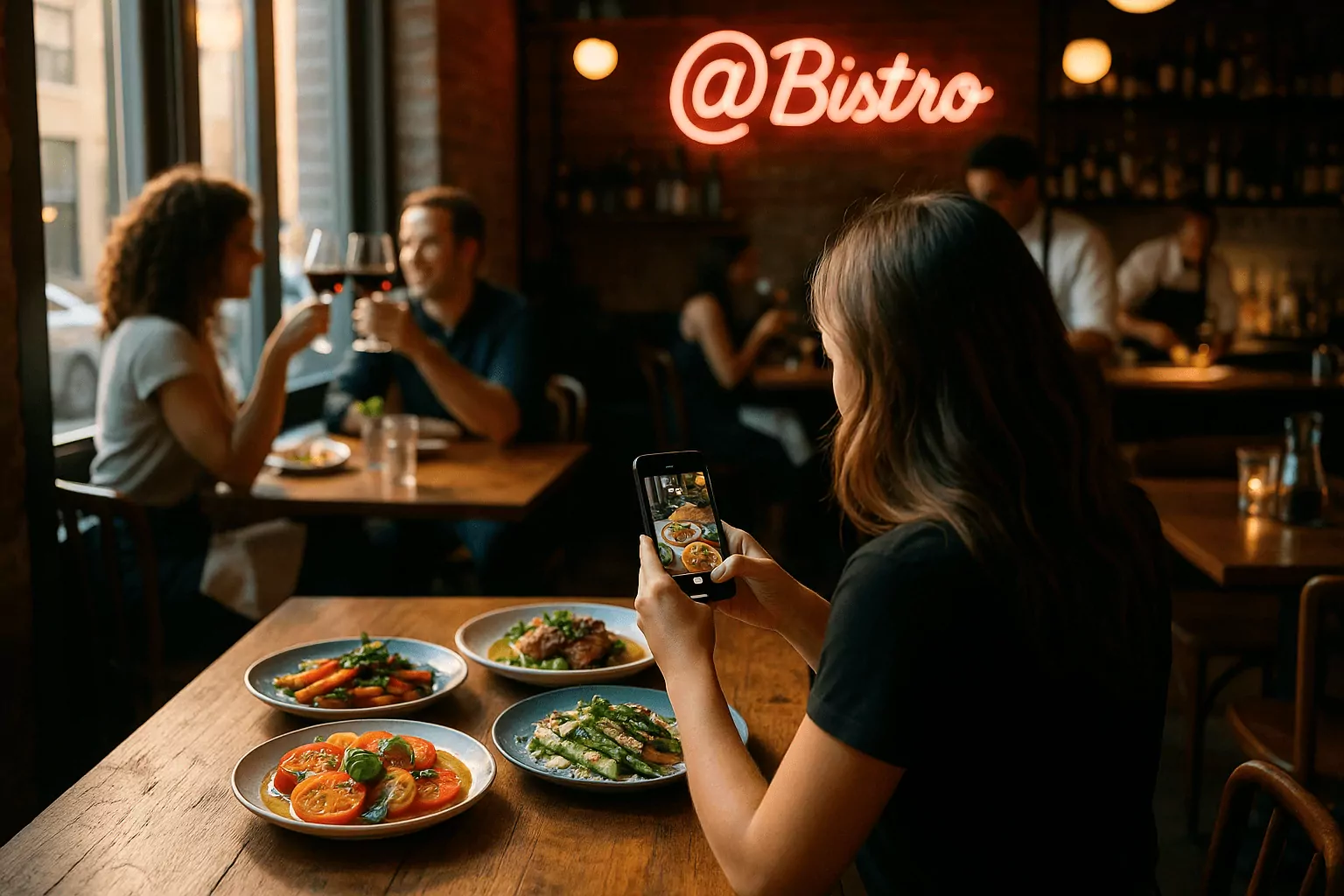
Make it effortless for guests to post content you can proudly reshare. Place subtle photo cues-neon tags, branded coasters, and clean surfaces-where plates land, and keep lighting flattering across key tables. Print a concise handle and hashtag on menus and receipts to standardize mentions. Create monthly prompts like "first-bite face" or "chef's secret pairing," and feature winners in Stories and a feed roundup. Consistency ensures user-generated content restaurants rely on becomes a steady acquisition channel.
Build a lightweight permission workflow to stay compliant and fast. Save DM templates that request reuse rights and clarify credit, then tag creators prominently when you post. Track top contributors in a simple sheet and surprise them with dessert upgrades or priority bookings. This reciprocal approach fuels more content while deepening loyalty. Over time, guests become an extension of local restaurant marketing [City] with authentic, high-trust endorsements.
Influencers and Partnerships in [City]
Work with micro-creators who actually move plates, not just likes. Prioritize partners within walking or short driving distance, and review their audience geography before agreeing to terms. Offer structured experiences-chef's counter, menu previews, or neighborhood walks ending at your bar-that translate into compelling narratives. Provide a clear brief with shot ideas, key messages, and your non-negotiables, while leaving room for their style. Done right, this is restaurant social media marketing [City] that feels organic.
Track performance beyond vanity metrics by issuing unique reservation links or codes. Repurpose creator assets into ads, Stories, and menu boards with agreed-upon rights to extend value. Pair partnerships with community ties-charity nights, school teams, or local festivals-to reinforce place-based credibility. Rotate fresh faces quarterly so your feed stays dynamic and reflective of [City]'s culture. This cadence compounds reach and supports Facebook ads for restaurants with proven visuals.
Social Proof, Reviews, and Messaging
Turn praise into persuasive assets across your channels. Screenshot standout reviews, trim them for readability, and design a simple template that matches your brand. Rotate quotes into Stories and carousels near booking calls to reinforce trust at the right moment. Encourage private feedback via DMs to resolve issues quickly while steering public love to review platforms. When timely, pin a glowing testimonial to your profile to anchor credibility.
Systemize response times and tone so every guest feels heard. Use quick-reply banks that personalize names, dishes, and visit details, then follow with a clear next step such as a comp offer or reservation link. Monitor keywords related to local restaurant marketing [City] and neighborhood events to join conversations naturally. This approach keeps your brand present, helpful, and top-of-mind. Over weeks, it boosts conversion and complements user-generated content restaurants share daily.
Frequently Asked Questions
How often should a restaurant in [City] post on each platform?
Post quality content on Instagram 4-6 times weekly, supported by daily Stories for timely specials and vibe. Aim for 2-4 Reels or TikToks per week to maintain reach and discoverability. On Facebook, publish 3-5 times weekly, with paid boosts for key offers or events. Maintain a predictable cadence so followers know when to expect new dishes and announcements. This schedule balances visibility with production realities and supports social media strategies for restaurants in [City]. As performance trends emerge, shift more volume to formats that drive reservations most efficiently.
What budget should we start with for Facebook ads for restaurants?
Start with a modest daily budget-often $10-$30-focused on a single objective like reservations or message replies. Allocate 60% to always-on proximity campaigns and 40% to rotating offers, events, or seasonal menus. Test two creatives and two audiences at a time to limit variables and learn faster. Evaluate cost per reservation and messages started weekly, then move spend to the winning combinations. As predictability improves, scale gradually to avoid sudden frequency spikes that raise costs. This disciplined approach keeps Facebook ads for restaurants accountable and aligned with local demand in [City].