Effective Social Media Marketing for Restaurants in [City] Tips
Practical playbook for local restaurant owners to grow followers, reservations, and revenue using city-specific social media tactics.
Build a Local-First Social Media Foundation
Define your restaurant's goals and audience in [City]
Effective social media marketing for restaurants in [City] starts with clear goals and a specific local audience. Decide whether you want to increase weekday covers, push a new menu item, or grow group bookings, then set measurable targets for each. A focused restaurant social media strategy helps you prioritize content, timing, and spend across platforms. Map top diner personas by neighborhood, cuisine interest, price sensitivity, and dining occasions to shape creative and offers. When you know who you serve and why they dine out, every post can move someone toward a reservation.
Validate those personas with existing guest data and frontline insights from hosts and servers. Review reservation notes, order patterns, and feedback to surface real-world motivations worth highlighting online. Segment your audience into repeat locals, special-occasion diners, and tourists to tailor messaging and cadence. Tie each segment to a conversion event, like "book now," "call ahead," or "join waitlist," so outcomes stay tangible. Strong targeting discipline is the base layer of local restaurant marketing that compounds over time.
Choose channels that match diners in [City]
Not every platform fits every concept, so pick channels that mirror how diners in [City] decide where to eat. Visual-first spots thrive on Instagram marketing for restaurants, while family-focused brands may see steadier reach on Facebook. If your menu is trend-forward, short-form video on Reels and TikTok can spark rapid discovery and social proof. Bars and chef-driven kitchens often win on TikTok with behind-the-scenes prep, staff personality, and nightlife energy. Keep LinkedIn in play for private events and corporate catering if business districts are part of your base.
Audit competitors and best-in-class accounts in similar cities to benchmark frequency, tone, and feature usage. Track which platforms already send traffic to your site or reservation link, then double down on those strengths. Align each channel to a specific goal, such as brand reach on Instagram, community updates on Facebook, and hiring on LinkedIn. Consolidate efforts into two primary platforms until your system feels predictable and efficient. This focus turns a scattered approach into a tight restaurant social media strategy that scales.
Optimize profiles for local discovery and reservations
Well-optimized profiles convert casual scrollers into booked guests by removing friction. Use a clean, keyword-rich bio with cuisine, neighborhood, and signature items, plus a clear call to action. Add a reservation button, menu link, and pickup or delivery options directly on-platform for speed. Keep name, address, phone, and hours consistent across platforms to reinforce local signals and trust. High-quality highlights for menus, hours, events, and reviews make your page a reliable source for quick decisions.
Visual identity should be consistent but not sterile, with on-brand colors, legible typography, and appetizing photography. Pin top content, like seasonal menus and chef spotlights, to guide first impressions. Encourage guests to tag your handle and location to expand local restaurant marketing naturally. Monitor DMs and comments daily, responding with warmth and practical help on wait times, parking, and dietary notes. The result is a profile that reduces questions and increases conversions without extra ad spend.
Create Scroll-Stopping Content That Sells Tables
Content pillars for effective social media marketing for restaurants in [City]
Build content pillars that align with your diners' decisions: crave, trust, and act. Crave content showcases signature dishes, limited-time items, and sensory details that spark appetite. Trust content features chefs, sourcing, reviews, and behind-the-scenes process that reduce risk for first-timers. Act content drives bookings with timely offers, events, and reminders oriented to weather, holidays, or paydays. This structure keeps effective social media marketing for restaurants in [City] consistent, persuasive, and measurable.
Rotate formats within each pillar to keep the feed fresh while staying recognizable. Pair close-up food shots with motion elements like steam or pour shots to elevate appeal. Include staff stories and vendor partnerships to humanize the brand and support community credibility. Use captions that lead with a hook, answer a diner question, and end with a direct CTA. Track which pillar drives the most reservations and bias your calendar accordingly.
Turn guests into advocates with user-generated content
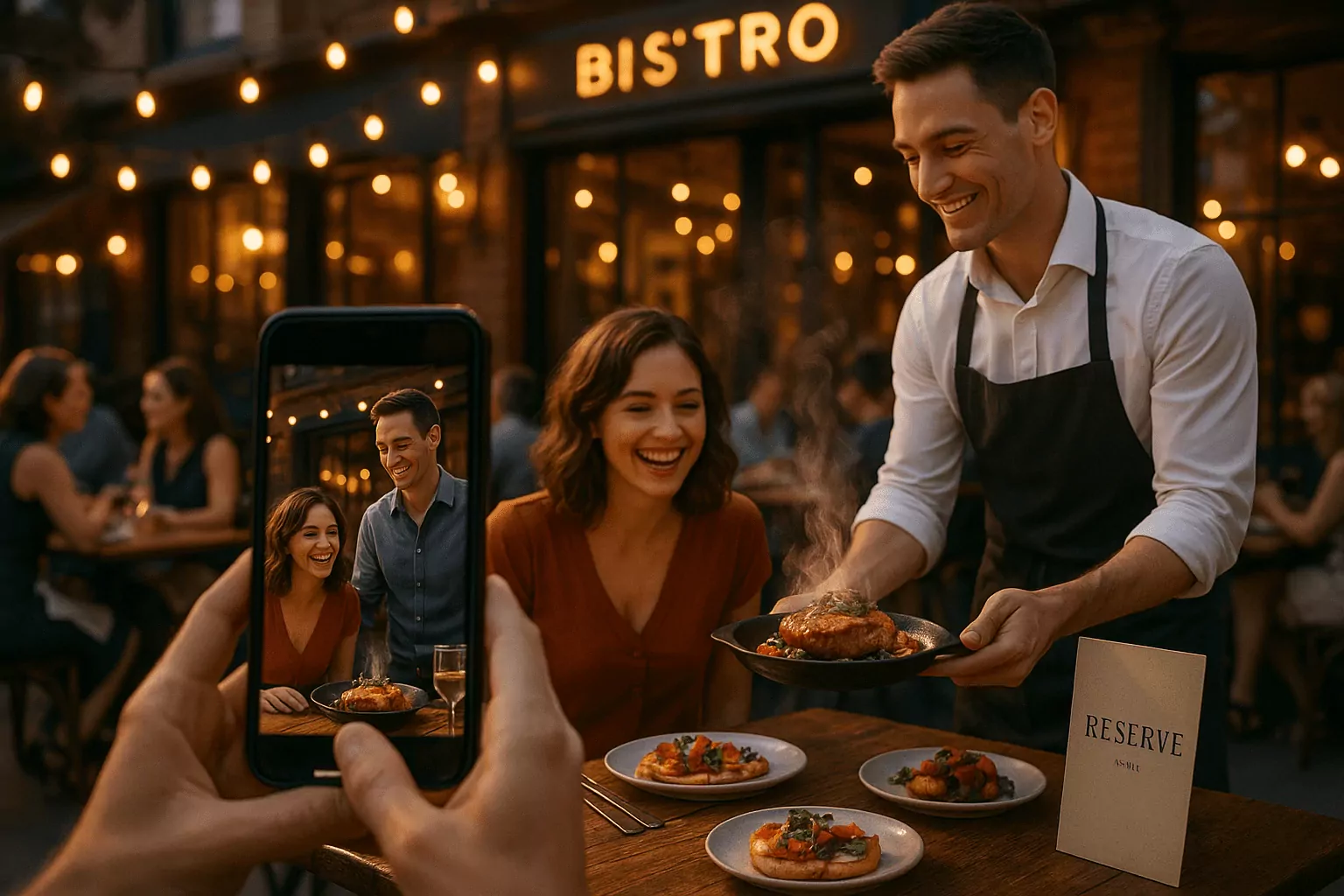
Make it effortless for happy diners to create user-generated content for restaurants by designing photogenic moments. Place subtle branded touches near great lighting, like a logo coaster or tiled wall by a window seat. Train servers to spot birthday plates or table-side finishing and offer to snap group photos. Re-share guest posts with credit and a warm note to reinforce community and repeat behavior. Create a monthly roundup that thanks creators and highlights new dishes they loved.
Run light-touch incentives that feel classy, not cheesy, to multiply user-generated content for restaurants. Feature a "post and tag for a chance at chef's table" concept that rewards creativity, not volume. Save standout Stories to a "Guest Favorites" highlight that new visitors can scan quickly. Provide simple guidance in your bio or menu insert with your handle, location tag, and preferred hashtags. The compounding effect is social proof that reduces hesitation and nudges bookings.
Short-form video and Instagram marketing for restaurants
Short-form video is the engine of reach for many dining concepts, especially via Instagram marketing for restaurants. Focus on moments that stop thumbs: sizzles, sears, drizzle shots, and chef reactions to a perfect plate. Keep edits tight, captions readable on mute, and CTAs clear, like "Tap to book Friday." Experiment with hooks tied to [City] life, referencing neighborhoods, weather, or big local events. Post at times when locals plan meals, such as late mornings and late afternoons on weekdays.
Batch-shoot weekly to capture multiple angles and formats from the same prep session. Mix trending audio with original sounds, testing both for completion rate and shares. Balance Reels with carousels that show recipes, pairings, or step-by-step plating for depth. Reinforce brand positioning in every clip so Instagram marketing for restaurants builds identity, not just views. Track saves and shares closely, since they correlate strongly with future reservations.
Run Profitable Local Ads Without Wasting Budget
Smart campaign structure with Facebook ads for restaurants
Separate prospecting, retargeting, and loyalty into distinct campaigns to control budgets and outcomes. For reach, target tight geographic radiuses around [City] with foodie interests and dining behaviors. Use punchy creatives that mirror your top-performing organic posts to speed learning. In retargeting, show dynamic menus, limited-time offers, or table availability to warm audiences. This disciplined setup makes Facebook ads for restaurants predictable and easier to scale.
Build creative variations for lunch, dinner, and late-night to match intent and time of day. Keep copy concise with a single promise and a single CTA linked to your booking flow. Use campaign budget optimization and exclude recent converters to prevent waste. Test square and vertical formats to fit feed and Stories placements without awkward crops. Revisit naming conventions weekly so teams understand what each asset and audience represents when optimizing Facebook ads for restaurants.
Retargeting and lookalikes that fill seats midweek
Use retargeting to rescue consideration with timely, context-aware messages. Show weekday prix fixe, happy hour timers, or limited chef's counters to people who engaged recently. Segment by recency windows, like 3, 7, and 14 days, matching urgency and offer strength. Create lookalikes from high-value bookers and frequent commenters to expand quality reach. Pair these with creative that highlights ambiance and convenience factors, such as parking or nearby transit.
Coordinate ads with your posting calendar so messaging feels consistent across touchpoints. If a rainstorm hits [City], quickly pivot to delivery, comfort dishes, or cozy interiors in ads. Use frequency caps and rotate creatives to avoid fatigue, especially for locals. Watch assisted conversions in analytics to credit ads that influence but don't last-click. This orchestration turns modest budgets into steady midweek covers without discounting too deeply.
Measure ROI that matters: covers, AOV, and repeat visits
Skip vanity metrics and align reporting with bookings and lifetime value. Track covers, average order value, and repeat rate by channel so insights lead to action. Add UTM parameters to reservation links and POS tags for promo codes to tie outcomes to campaigns. Review weekly and monthly to balance quick wins with seasonality in [City]. These habits anchor your restaurant social media strategy in numbers, not hunches.
Create simple dashboards that visualize spend, reach, CTR, conversion rate, and cost per cover. Layer in qualitative notes from staff about guest comments and booking reasons. Compare organic pillars against paid creatives to see what truly moves diners. When a tactic beats benchmarks, roll it into SOPs so success is repeatable. Over time, this feedback loop powers sustainable local restaurant marketing.
Turn Engagement into Reservations and Loyal Regulars
Promotions and offers that convert in [City]
Design offers that feel exclusive and timely rather than perpetual and generic. Tie promotions to local happenings, like neighborhood festivals, sports games, or cultural holidays in [City]. Limit duration to preserve brand value and signal urgency, then showcase social proof as diners participate. Use booking codes or link stickers so redemptions are easy to attribute to posts. In captions, lead with benefit, clarify the window, and finish with a direct call to reserve.
Bundle experiences to increase perceived value, such as tasting flights, chef meet-and-greets, or live music pairings. Promote add-ons like wine pairings or desserts to raise check averages without heavy discounting. Make sure front-of-house knows current offers so guests get a seamless experience on arrival. Re-share guest reactions to keep momentum and nudge fence-sitters. Smart offer design respects margins while driving demand where you need it most.
Community partnerships and local restaurant marketing
Collaborate with nearby businesses, arts groups, or fitness studios to reach aligned audiences. Co-create content series, limited dishes, or ticketed events that both brands promote. Feature partners in your feed and Stories to deepen credibility and community reach. Encourage partners to post on their channels using shared assets and CTAs. This is local restaurant marketing that builds goodwill and measurable traffic.
Track partner-driven bookings with unique links and reservation notes for clarity. Plan quarterly collabs so your calendar has dependable spikes in interest. Use behind-the-scenes snippets from planning to event day to keep audiences engaged. Thank partners publicly and summarize impact to encourage future projects. Over time, partnerships become a signature of your brand and a steady pipeline of new guests.
Simple systems to sustain effective social media marketing for restaurants in [City]
Create a lightweight weekly workflow so consistency never slips, even on busy nights. Batch content on one shoot day, schedule posts, and set daily 15-minute engagement blocks. Keep a running idea list tied to your pillars and [City] events to prevent creative ruts. Standardize brand voice, captions, and CTAs so anyone can execute confidently. This structure supports a resilient restaurant social media strategy as teams change or grow.
Document SOPs for approvals, responses, and crisis handling to move fast without mistakes. Review metrics every Monday and adjust the next two weeks accordingly. Refresh hero assets each season to stay aligned with produce and weather in [City]. Revisit platform choices quarterly so effort matches results. Systems protect quality and sustain effective social media marketing for restaurants in [City] long term.
Frequently Asked Questions
How often should restaurants in [City] post on social media?
Post three to five times per week on your primary platform to balance consistency with quality. Add two to three Stories most days for timely updates that do not crowd the feed. If bandwidth is limited, keep frequency steady and focus on your strongest pillars. Match cadence to diner behavior in [City], increasing output around weekends and city events. Reuse high performers with fresh captions to extend reach without extra production. Over time, this steady rhythm strengthens your restaurant social media strategy.
Which platform drives the most reservations in [City]?
For many concepts, Instagram drives discovery while Facebook converts with links and buttons. Visual venues and chef-led spots often see faster traction through Instagram marketing for restaurants. Family-friendly and event-driven concepts may convert better via Facebook, especially with simple offers. The answer depends on audience, content quality, and how seamless your booking flow feels on each platform. Track conversions with UTMs and reservation integrations to see what truly wins in [City]. Let data, not guesses, shape your local restaurant marketing mix.
What budget works for Facebook ads for restaurants?
Start with a modest daily budget that you can sustain for 30 days, then scale by performance. Allocate roughly 60% to prospecting, 30% to retargeting, and 10% to loyalty or VIPs. Keep tests tight: two to three audiences and two to three creatives per ad set. Evaluate cost per cover, not just CPM or CPC, to guide decisions. When an ad set beats your target, incrementally raise budgets and refresh creatives. This disciplined approach makes Facebook ads for restaurants efficient and profitable.